India Manufacturing Tracker: 2024-25
India Briefing
By Archana Rao
December 17, 2024
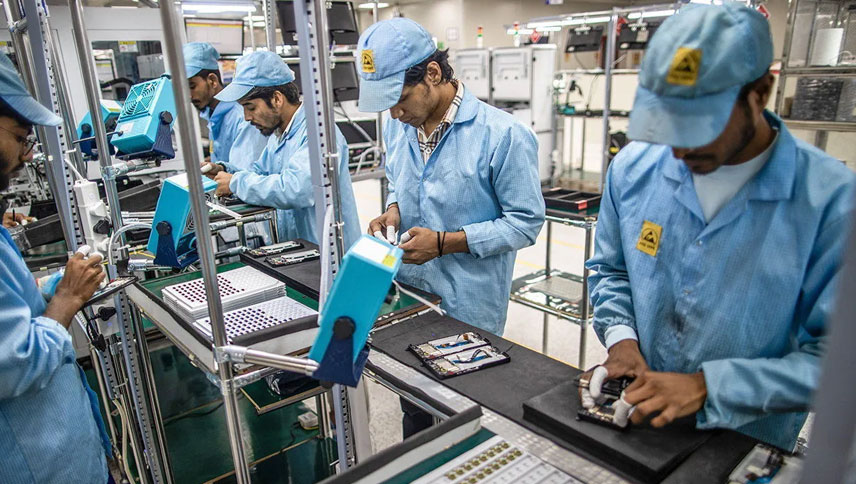
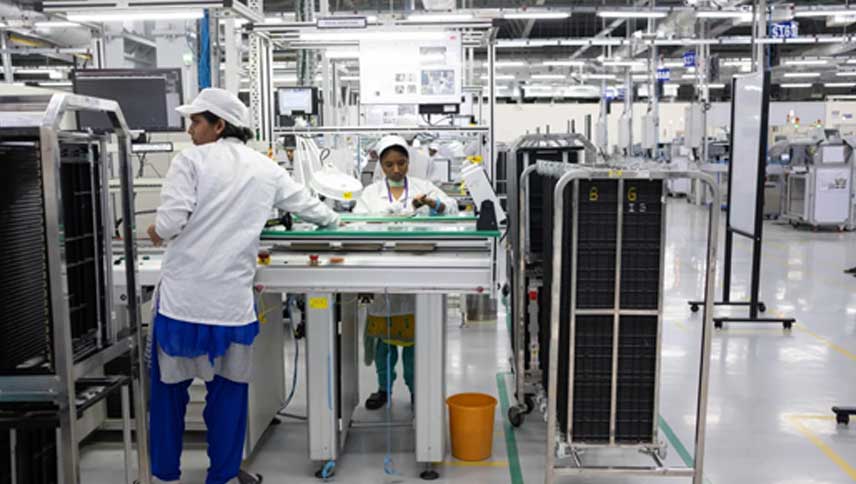
India is keen to expand its manufacturing sector, with a focus on diversifying into newer lines of production, advancing the industrial capacity of traditional sectors like automobiles, and establishing a globally competitive domestic supply chain ecosystem.
Various national flagship schemes, like the Production-Linked Incentives (PLI) program targeting 14 sectors, alongside state-specific industrial policies, intend to raise the sector-wise contribution of manufacturing to the GDP to 25 percent by 2025.
While India’s manufacturing sector has experienced steady growth in the past decade, it has been somewhat underwhelming relative to the country’s large population. Recently, however, the sector has gained momentum, driven by new investments and a strategic move by several foreign manufacturing firms to diversify their operations across multiple markets.
In FY 2022-23, India’s manufacturing sector recorded an annual production growth rate of 4.7 percent, contributed 17 percent to the nation’s GDP, and employed 57.3 million workers during this period.
Given this background, India Briefing is launching this 2024-25 India manufacturing tracker, where we will monitor key statistics associated with India’s industrial production sectors in the 2024-25 fiscal year, highlight emerging trends, and note prominent government support schemes.
India’s Purchasing Managers’ Index (PMI)
The Purchasing Managers’ Index (PMI) is an economic indicator based on monthly surveys of companies. It tracks trends in both the manufacturing and services sectors, showing whether business conditions are expanding, contracting, or staying the same. PMI is important for predicting the economic health of a country and is closely monitored.
There are two types of PMI:
- Manufacturing PMI
- Services PMI
A combined PMI includes both sectors.
How is manufacturing PMI calculated?
The PMI is derived by sending fact-based questions to a large number of companies in the concerned sector. For manufacturing PMI, the questionnaire is sent to manufacturing companies. The questions are factual in nature, and the survey is not meant for opinions, intentions, or expectations.
The PMI is based on five key factors:
- New orders (30%)
- Output (25%)
- Employment (20%)
- Suppliers’ delivery times (15%)
- Stock of items purchased (10%)
A PMI above 50 indicates business expansion, while below 50 signals contraction. The difference between 50 and the previous month’s data shows the rate of change.
PMI is released before other economic indicators like GDP and industrial output, offering early insight into economic trends. It’s useful for manufacturers, suppliers, and investors to gauge economic health and make informed decisions.
India’s monthly PMI data
| India’s PMI month-on-month | Output (%) |
| November | 58.4 |
| October | 58.5 |
| September | 56.5 |
| August | 57.5 |
| July 2024 | 58.1 |
| June 2024 | 58.3 |
| May 2024 | 57.5 |
| April 2024 | 58.8 |
| March 2024 | 59.1 |
| February 2024 | 56.9 |
| January 2024 | 56.5 |
Source: HSBC India Manufacturing PMI
Note: These PMI figures do not include estimates.
India’s Index of Industrial Production (IIP)
In India, IIP records growth rates of the three sectors, i.e., mining, manufacturing and electricity, on a month-on-month basis. Manufacturing is the largest contributor, making up 77.6 percent of total industrial production. Key segments within manufacturing include:
- Basic metals: 13%
- Coke and refined petroleum products: 12%
- Chemicals and chemical products: 8%
- Food products: 5%
- Pharmaceuticals and related products: 5%
- Motor vehicles and trailers: 5%
- Machinery and equipment: 5%
- Non-metallic mineral products: 4%
- Textiles, electrical equipment, and fabricated metal products: 3% each
- Mining contributes 14% of total output, while electricity accounts for 8%.
| Index of Industrial Production | Growth over the corresponding period of previous year |
| October 2024 | 3.5% |
| September 2024 | 3.1% |
| August 2024 | -0.1%* |
| July 2024 | 4.7%** |
| June 2024 | 4.7% |
| May 2024 | 6.2% |
| April 2024 | 5% |
| March 2024 | 4.9% |
| February 2024 | 5.6% |
| January 2024 | 4.1% |
| December 2023 | 4.4% |
| November 2023 | 2.5% |
| October 2023 | 11.9 % |
| September 2023 | 6.4% |
| August 2023 | 10.9% |
| July 2023 | 6.2% |
Source: MoSPI, Trading Economics
*According to the announcement by the Ministry of Statistics and Programme Implementation, in August, the Index of Industrial Production (IIP) contracted year-on-year for the first time in 22 months, decreasing by 0.1% compared to July’s growth, due to a slowdown in economic activities and an unfavorable base effect, according to the National Statistical Office (NSO).
** The ministry has also revised the July’s IIP output from 4.8% to 4.7%.
The data released by the National Statistics Office (NSO) showed that the growth in mining, manufacturing and electricity for September 2024. In April-September this fiscal, the IIP grew 4% against 6.2% in the year-ago period.
1. October 2024:
As per the latest IIP growth rate, manufacturing output rose 4.1% in October, electricity generation grew 2% and mining activity was up 0.9%.
Within the manufacturing sector, the largest contributors to growth were the production of basic metals (3.5%), electrical equipment (33.1%), and coke and refined petroleum products (5.6%).
Considering the April-October period, industrial output went up 4%.
2. September 2024:
The growth rates of the three sectors, mining, manufacturing and electricity for the month of September 2024 are 0.2%, 3.9% and 0.5% respectively.
Within the manufacturing sector, top three positive contributors for the month of September 2024 are – “manufacture of coke and refined petroleum products” (5.3%), “manufacture of basic metals” (2.5%), and “manufacture of electrical equipment” (18.7%).
3. August 2024:
The IIP growth rate for the month of August 2024 is (-)0.1 percent which was 4.7% in the month of July 2024.
The growth rates of the three sectors, mining, manufacturing and electricity for the month of August 2024 are (-)4.3% , 1.0% and (-)3.7% respectively. It is likely that the decline in the growth of mining sector is due to heavy rainfall in the month of August 2024.
4. July 2024:
Industrial output in India was revised to 4.7% on an annual basis in July 2024. This was previously estimated to touch 4.8% based on market expectations.
The mining sector shrank 4.3%, likely due to heavy rainfall in the month and electricity contracted 3.7%.
In contract, manufacturing rose 1%, with the biggest upward contributors coming from manufacture of basic metals (3%), manufacture of electrical equipment (17.7%), and manufacture of chemicals and chemical products (2.7%)
5. June 2024:
Industrial output in India rose by 4.2% on an annual basis in June 2024, below market expectations of 5.5% and marking the lowest growth rate in five months.
Manufacturing output expanded by 2.6% with growth noted for manufacturing of computer, electronic & optical products (+10.7%) and electrical equipment (+28.4%)
6. May 2024:
Industrial output increased by 5.9% (highest since October 2023), surpassing expectations of 4.9%.
Manufacturing output grew by 4.6%, with strong performance in pharmaceuticals (+7.5%) and basic metals (+7.8%).
Mining output rose by 6.6%, and electricity by 13.7%.
7. April 2024:
Industrial output rose by 5%, exceeding expectations of 4.6%.
Manufacturing output expanded by 3.9%, with significant growth in furniture (+38.4%) and transport equipment (+17.4%).
Mining output increased by 6.7%, and electricity by 10.2%.
8. March 2024:
Industrial output increased by 4.9%, slightly below the 5.1% expectation.
Manufacturing output grew by 5.2%, with notable growth in transport equipment (+25.4%) and furniture (+31%).
Mining output rose by 1.2%, and electricity by 8.6%.
9. February 2024:
Industrial output rose by 5.7%, slightly below the 6% expectation but still the highest since October 2023.
Manufacturing output expanded by 5%, with strong growth in motor vehicles (+11.6%) and basic metals (+8.8%).
Mining output increased by 8%, and electricity by 7.5%.
10. January 2024:
Industrial output grew by 3.8%, below expectations of 4.1%.
Manufacturing output advanced by 3.2%, while mining accelerated to 5.9%, and electricity to 5.6%.
India’s GDP growth rate
In India, the GDP growth rate measures the change in the value of goods and services produced each quarter, adjusted for seasonal variations. India is the fifth-largest economy globally and the second most populous country.
Key sectors of the Indian economy:
- Services: The largest and fastest-growing sector, contributing over 60% of GDP. This includes trade, hotels, transport, communication, finance, insurance, real estate, and community services.
- Agriculture: Contributes around 12% of GDP but employs over 50% of the workforce.
- Manufacturing: Accounts for 15% of GDP.
- Construction: Makes up 8% of GDP.
- Mining, Quarrying, Electricity, Gas, and Water Supply: Together contribute the remaining 5% of GDP.
| Quarterly assessment | GDP growth rate |
| Q1 2024-25 | 1.9 |
| Q4 2023-24 | 2.1 |
| Q3 2023-24 | 1.9 |
| Q2 2023-24 | 2.1 |
| Q1 2023-24 | 2.3 |
| Quarterly assessment | Manufacturing sector contribution to India’s GDP | ||||||||||
| Value in INR billion | Value in US$ million | ||||||||||
| Q1 2024-25 | 77.09 | 918.2 | |||||||||
| Q4 2023-24 | 65.38 | 778.7 | |||||||||
| Q3 2023-24 | 68.7 | 818.3 | |||||||||
| Q2 2023-24 | 64 | 762.3 | |||||||||
| Q1 2023-24 | 70.8 | 843.3 | |||||||||
Employment in the manufacturing sector
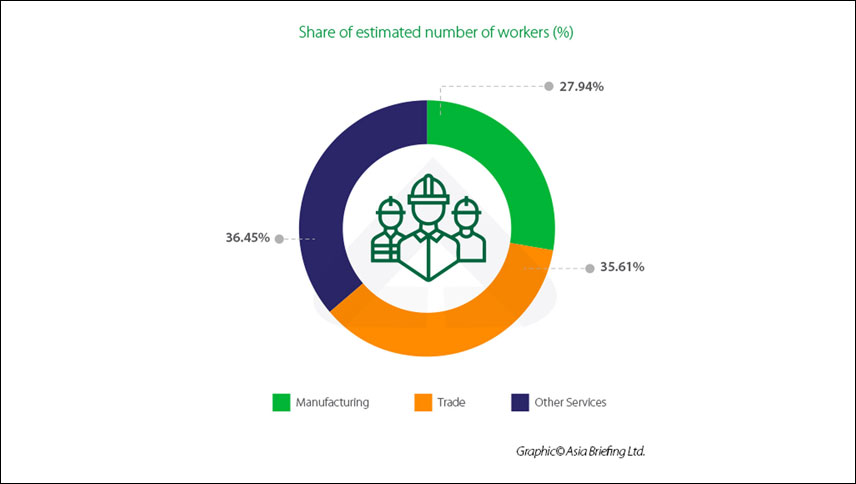
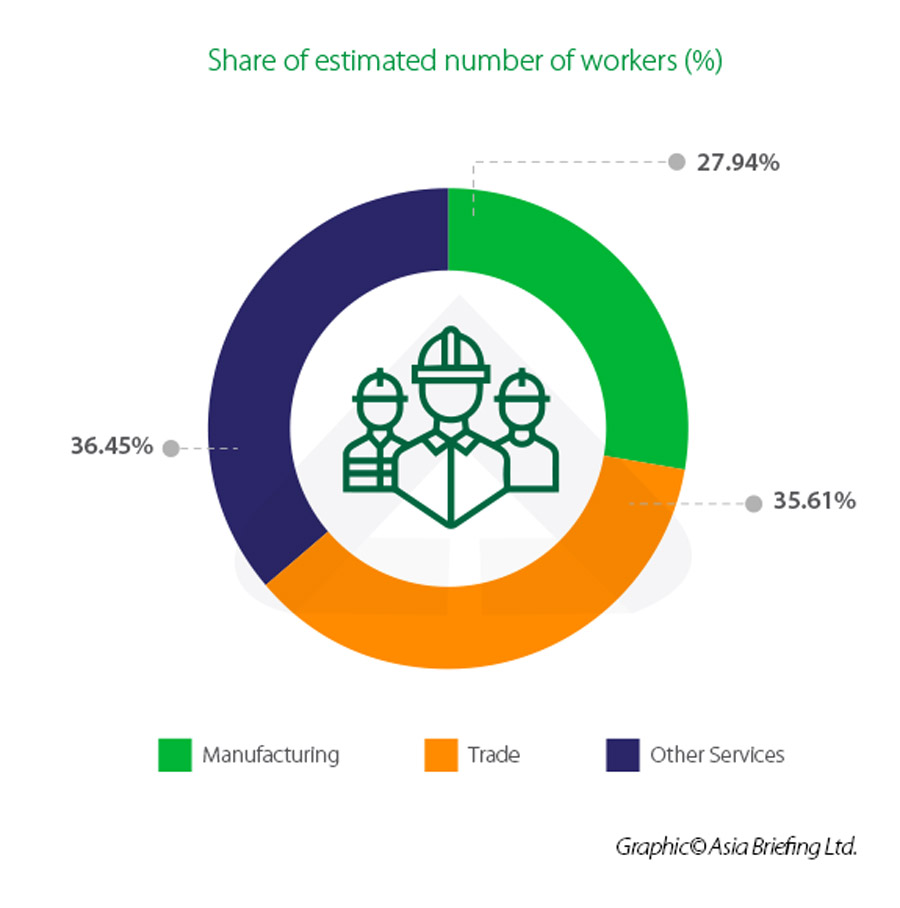
Percentage share of estimated number of workers by broad activity category, sector and establishment type.
| Employment Across the Manufacturing Sector in India from FY 2017 to FY 2023 | |
| Year | Employment (in millions) |
| 2017 | 51.31 |
| 2018 | 39.9 |
| 2019 | 40.68 |
| 2020 | 40.89 |
| 2021 | 29.83 |
| 2022 | 31.57 |
| 2023 | 35.65 |
Source: Statista
According to the Annual Survey of Industries (ASI), employment in India’s manufacturing sector dipped slightly in 2020-21 due to the pandemic but rebounded with 7 percent year-on-year growth in 2021-22, surpassing pre-pandemic levels by over 935,000 workers. Average salaries also rose, with a 1.7 percent increase in 2020-21 and an 8.3 percent rise in 2021-22.
India’s manufacturing sector showed resilience, with Gross Value Added (GVA) increasing by 26.6 percent in 2021-22, driven by strong growth in key industries like basic metals, pharmaceuticals, and motor vehicles. The top five states employing the highest number of persons in this sector were Tamil Nadu, Gujarat, Maharashtra, Uttar Pradesh and Haryana in ASI 2020-21 as well as in ASI 2021-22.
The ASI noted that despite various challenges, the manufacturing sector showed a strong recovery, with significant gains in invested capital, output, and profits.
Production-linked incentives in India
India launched the Production Linked Incentive (PLI) Schemes for 14 key sectors, with an outlay of INR 1.97 trillion, to increase domestic manufacturing capacities and export size.
| Employment Across the Manufacturing Sector in India from FY 2017 to FY 2023 | |
| Year | Employment (in millions) |
| 2017 | 51.31 |
| 2018 | 39.9 |
| 2019 | 40.68 |
| 2020 | 40.89 |
| 2021 | 29.83 |
| 2022 | 31.57 |
| 2023 | 35.65 |
India’s manufacturing sector has consistently contributed only 17 percent to the country’s GDP and strengthening it is crucial for providing employment to the growing youth population and making better use of semi-skilled labor.
As global economies look to reduce their reliance on China, India has emerged as a key alternative manufacturing hub due to its market potential, favorable policies, and competitive advantages.
The expansion of manufacturing also benefits the real estate industry, driving demand for industrial and logistics spaces. This growth highlights the interconnectedness of manufacturing and real estate development, signaling mutual economic progress. The recent rise in industrial and logistics real estate reflects this trend.
Central government policies on manufacturing
| Union Ministry | National policies on manufacturing |
| Ministry of Textile |
|
| Ministry of heavy industries and public enterprise |
|
| Ministry of Steel |
|
| Ministry of Food Processing Industries |
|
| Ministry of Housing and Urban Affairs |
|
| Ministry of Electronics and Information Technology |
|
| Ministry of Commerce and Industry |
|
| Ministry of Petroleum and Natural Gas |
|
Manufacturing schemes in India
| Union Ministry | Manufacturing schemes |
| Ministry of Textile |
|
| Ministry of Heavy Industries and Public Enterprise |
|
| Ministry of Steel |
|
| Ministry of Food Processing Industries |
|
| National Horticulture Board |
|
| Ministry of Electronics and Information Technology |
|
| Ministry of Commerce and Industry |
|
| Department of Animal Husbandry, Diary and Fisheries |
|
| Bureau of Energy Efficiency |
|
| Ministry of Agriculture and Farmers Affairs |
|
Source: NITI Aayog
State-level policies for manufacturing
| State | Manufacturing-specific policies |
| Andhra Pradesh |
|
| Arunachal Pradesh |
|
| Assam |
|
| Bihar |
|
| Chhattisgarh |
|
| Goa |
|
| Gujarat |
|
| Haryana |
|
| Himachal Pradesh |
|
| Jharkhand |
|
| Karnataka |
|
| Kerala |
|
| Madhya Pradesh |
|
| Maharashtra |
|
| Manipur |
|
| Meghalaya |
|
| Mizoram |
|
| Nagaland |
|
| Odisha |
|
| Punjab |
|
| Rajasthan |
|
| Sikkim | Nil |
| Tamil Nadu |
|
| Telangana |
|
| Tripura | Nil |
| Uttarakhand |
|
| Uttar Pradesh |
|
| West Bengal |
|
| Andaman and Nicobar Islands |
|
| Chandigarh |
|
| Dadra and Nagar Haveli and Daman & Diu |
|
| The Government of NCT of Delhi |
|
| Jammu & Kashmir |
|
| Ladakh |
|
| Lakshadweep | Nil |
| Puducherry |
|
Source: NITI Aayog
India’s manufacturing sector in 2024
According to the latest, preliminary estimates released by HSBC India Manufacturing Purchasing Managers Index (PMI), compiled by S&P Global, India Services PMI was revised to 58.4 in November 2024 from reading of 58.5 in October. The figure stood at 56.5 in September, 57.5 in August followed by July with 58.1, a marginal dip from the previous month with 58.3.
According to the Chief India Economist at HSBC, during November, services sector employment notably grew at the fastest pace. The hiring surge reflected the sector’s improving business confidence, growing new orders, and vigorous international demand.
The report accompanying the survey results noted that services firms continued to expand their operational capacity through recruitment drives to handle the increasing influx of new business. Report observations indicate a mix of permanent and temporary hires in November.
The HSBC flash survey, based on responses from 400 manufacturers and an equal number of service providers, revealed that growth in India’s private sector output in November was driven by an increase in new business and export sales, despite rising cost pressures and the sharpest increase in selling prices since February 2013.
Additionally, the latest flash India PMI report notes job creation was notably stronger in the services sector during the month. However, India Manufacturing PMI Output Index dipped to 56.5 in November from 57.5 in October.
India’s manufacturing sector has been growing steadily, with March marking the 33rd consecutive month of output growth, and the fastest growth in new orders in three-and-a-half years. Both domestic and export markets contributed to this rise, with export orders increasing at their quickest pace since May 2022.
India is pushing forward with significant investments in infrastructure, manufacturing, and sunrise sectors like semiconductors and electric vehicles, aiming to become a US$10 trillion economy in the next decade.
Foreign direct investment in India’s manufacturing sector
As of August 2024, foreign direct investment (FDI) inflows into India’s manufacturing sector rose by 69% to US$165.1 billion during 2014-24. In a written reply to the Rajya Sabha, Minister of State for Commerce and Industry, Jitin Prasada, highlighted that India is rapidly emerging as a preferred destination for foreign investment in manufacturing.
He noted that FDI equity inflows in the manufacturing sector over the past ten years (2014-24) increased by 69 percent compared to the previous decade (2004-14), when inflows stood at US$97.7 billion. Additionally, total FDI inflows of US$383.50 billion were recorded in the past five financial years (2019-20 to 2023-24).
The Minister stated that government initiatives have significantly reduced dependency on imports in several sectors. For instance, mobile phone imports dropped from INR 486.09 billion (US$5.7 billion) in 2014-15 to INR 76.74 billion (US$914 million) in 2023-24, while exports surged from INR15.66 billion (US$186 million) in 2014-15 to over INR 1289.82 billion (US$15.3 billion) in 2023-24.
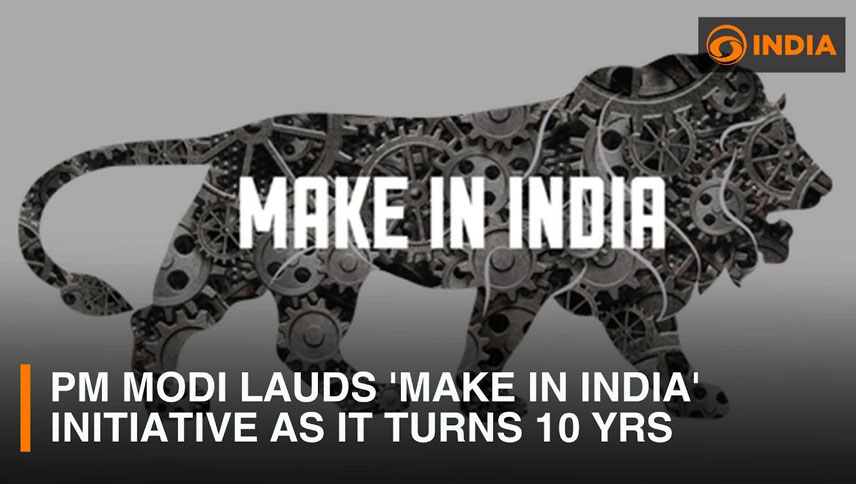
The “Make in India” initiative, launched on September 25, 2014, has played a pivotal role in boosting FDI equity inflow in the manufacturing sector by 57 percent between 2014-2022 compared to the previous eight years (2006-2014).
To further enhance India’s manufacturing capabilities and economic growth, the government introduced a series of policy measures, including the Atmanirbhar Bharat (self-reliant India) packages, the Production Linked Incentive (PLI) Scheme for 14 key sectors, and investment opportunities under the National Infrastructure Pipeline (NIP) and National Monetisation Pipeline (NMP). Other initiatives include the India Industrial Land Bank (IILB), Industrial Park Rating System (IPRS), and the National Single Window System (NSWS). An institutional mechanism, Project Development Cells (PDCs), has also been established in all concerned ministries and departments to fast-track investments.
India has taken additional steps to attract domestic and foreign investments, such as introducing the Goods and Services Tax (GST), reducing corporate tax rates, improving the ease of doing business, reforming FDI policies, reducing compliance burdens, and boosting domestic manufacturing through public procurement orders, the Phased Manufacturing Programme (PMP), and Quality Control Orders (QCOs).
The PLI Schemes, with an incentive outlay of INR 1.97 trillion (US$23.4 billion), are expected to enhance production, skills, employment, economic growth, and exports over the next five years.
(US$1 = INR 83.95)
Source: https://www.india-briefing.com/news/india-manufacturing-tracker-2024-25-33968.html/